Why CPD is Essential for Counsellors (BACP Requirements, Ethics & Online Learning)
Continuing Professional Development (CPD) is widely recognised as an essential part of counselling practice. It is embedded within ethical frameworks, required by professional bodies such as the British Association for Counselling and Psychotherapy (BACP), and fundamental to maintaining safe, effective, and responsive therapeutic work.
However, beyond these requirements, CPD represents something deeper. It reflects a commitment to ongoing learning, reflection, and growth in a profession that continually asks us to meet complexity with care and competence.
In recent years, the way practitioners engage with CPD has begun to shift. Increasingly, counsellors are turning towards more flexible, self-paced forms of learning that fit alongside the realities of practice. This shift is not simply about convenience, but about creating sustainable ways to remain engaged in professional development over time.
CPD as an Ethical and Professional Responsibility
Ethical practice requires that counsellors work within the limits of their competence while taking active steps to develop and extend that competence. This principle is clearly outlined within professional frameworks such as the BACP Ethical Framework, where ongoing CPD is positioned as a core responsibility of practitioners.
Clients often bring complex and sensitive experiences into therapy, including trauma, self-harm, suicidal thoughts, identity exploration, and neurodivergence. Without continued learning, there is a risk that practitioners may feel underprepared or uncertain in responding to these presentations.
Engaging in CPD helps to ensure that:
- our knowledge remains current
- our practice is informed and reflective
- we are aware of our limitations
- we can respond ethically and appropriately to client needs
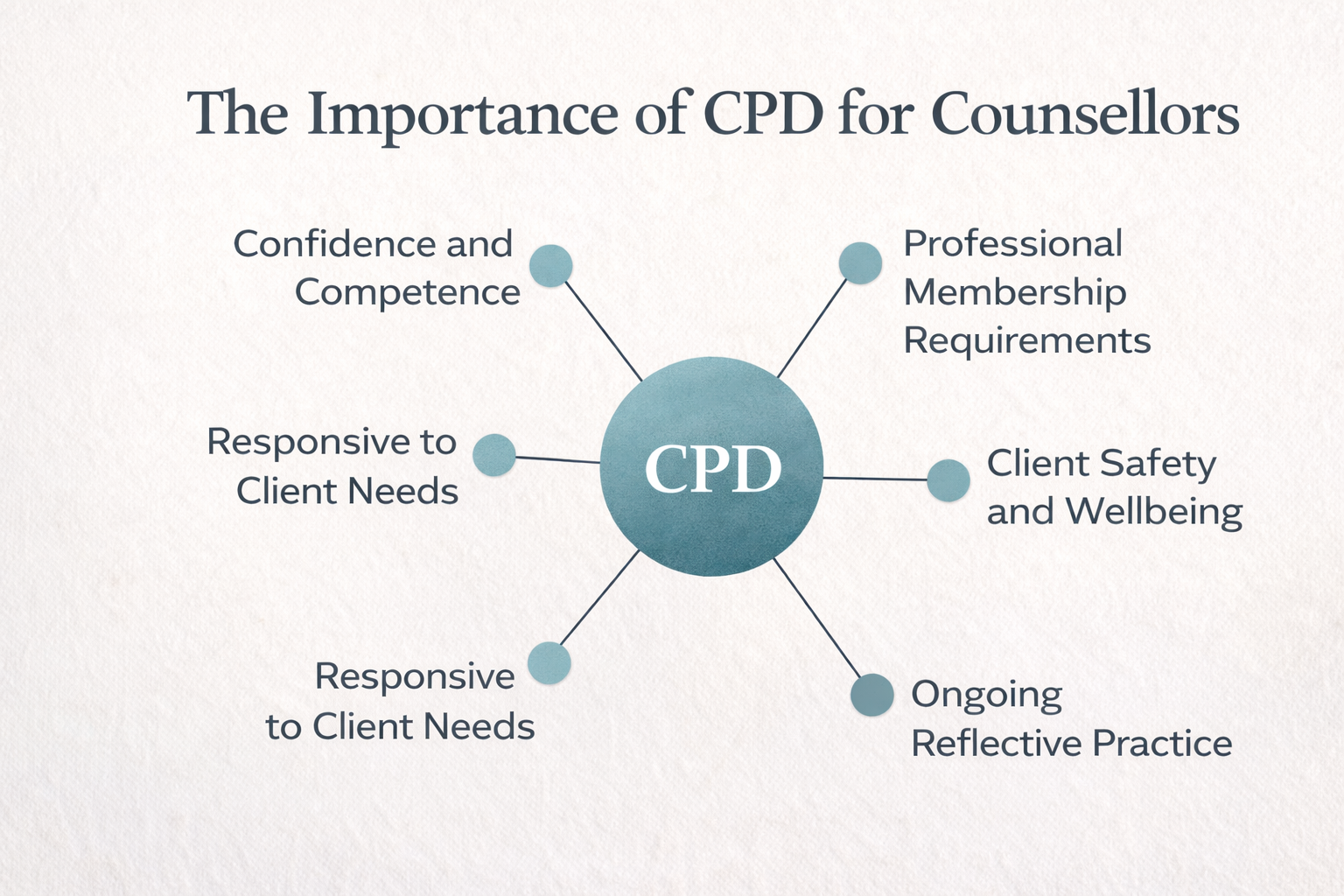
In this sense, CPD is directly linked to client safety and wellbeing. It supports counsellors in maintaining a standard of practice that is both competent and compassionate.
Meeting Professional Requirements (Including BACP)
For many counsellors, CPD is also a requirement for maintaining membership with professional bodies such as the BACP. Practitioners are expected to complete a minimum number of CPD hours each year as part of their commitment to professional standards.
While this can sometimes be viewed as an obligation to fulfil, it can also be understood as a supportive structure. These requirements encourage practitioners to remain engaged with learning, even when busy with client work and other responsibilities.
Importantly, CPD is not simply about accumulating hours. It is about engaging in learning that is meaningful and relevant to practice. This might involve:
- deepening understanding of specific client presentations
- developing confidence in complex areas of work
- reflecting on one’s own therapeutic approach
- exploring new perspectives or frameworks
When approached in this way, CPD becomes less about “ticking boxes” and more about supporting ongoing professional development.
The Reality of Practice: Time, Energy, and Accessibility
While the importance of CPD is widely recognised, many practitioners face practical challenges in engaging with it consistently.
These may include:
- limited time alongside a full client caseload
- balancing teaching, supervision, and personal commitments
- the cost and accessibility of in-person training
- the emotional energy required for intensive learning environments
Traditional CPD formats, such as full-day or multi-day workshops, may not always be feasible. As a result, some practitioners find themselves delaying or avoiding CPD, despite recognising its importance.
This is where more flexible approaches to learning become particularly valuable.
The Value of Online, Self-Paced CPD
Online, self-paced CPD offers an alternative that aligns more closely with the realities of modern practice. Rather than requiring practitioners to attend at specific times or locations, it allows learning to take place in a way that is adaptable and manageable.
Self-paced learning offers several key benefits:
Flexibility
Practitioners can engage with training at times that suit them, whether that is between client sessions, in the evening, or over a weekend. This makes it easier to integrate CPD into an already full schedule.
Space for Reflection
Unlike live training, which can sometimes feel fast-paced or intensive, self-paced learning allows time to pause, reflect, and revisit material. This can support deeper integration of learning into practice.
Accessibility
Online CPD removes many of the barriers associated with location and travel. It enables practitioners from a range of settings to access training that may not otherwise be available to them.
Relevance to Practice
Self-paced courses often focus on specific topics or areas of practice, allowing practitioners to choose learning that is directly relevant to their current client work.
Supporting Confidence in Complex Areas of Work
Many counsellors seek CPD in response to particular challenges in their practice. These might include working with:
- self-harm
- suicidal ideation
- neurodivergence
- trauma or complex emotional presentations
These are areas that can feel particularly demanding, both clinically and emotionally. Without additional training, practitioners may feel uncertain about how best to respond.
Self-paced CPD can provide a way to engage with these topics in a contained and manageable way. It allows practitioners to:
- build understanding gradually
- revisit material as needed
- reflect on how learning applies to their own practice
Over time, this can support a greater sense of confidence and clarity in working with complex client presentations.
CPD as Part of Ongoing Reflective Practice
While CPD often involves learning new concepts or approaches, it also plays an important role in supporting reflective practice.
Engaging with training can prompt questions such as:
- How does this relate to my current client work?
- Where do I feel confident, and where do I feel uncertain?
- What might I do differently in future sessions?
Self-paced learning, in particular, can support this reflective process. The ability to pause and return to material allows practitioners to engage more thoughtfully, rather than feeling pressured to absorb information quickly.
In this way, CPD becomes integrated into the ongoing process of developing as a practitioner.
Introducing Our CPD Hub
In response to the need for flexible, accessible, and practice-focused CPD, we have developed a CPD Hub designed specifically for counsellors and therapists.
The hub offers a growing range of online, self-paced courses that focus on areas commonly encountered in therapeutic practice, including:
- working with self-harm
- supporting clients experiencing suicidal thoughts
- working with neurodivergent clients
- exploring meaning-centred approaches through logotherapy
These courses are designed with the realities of practice in mind. They aim to provide:
- practical, relevant insights
- space for reflection
- accessible learning that can fit around existing commitments
Rather than overwhelming practitioners with large volumes of information, the focus is on supporting meaningful engagement with key areas of practice.
A Supportive Approach to Professional Development
Engaging in CPD does not need to feel pressured or overwhelming. It can be approached in a way that is steady, manageable, and aligned with the rhythms of practice.
Online, self-paced learning offers one way of doing this. It allows practitioners to remain engaged in their development without adding unnecessary strain.
For many counsellors, this approach makes it more possible to:
- stay up to date with their CPD requirements
- engage with topics that feel relevant and important
- continue developing confidence in their work
- maintain a sense of connection to the profession
CPD as a Continuing Journey
CPD is not something that is completed or finished. It is an ongoing process that evolves alongside a practitioner’s experience.
Over time, the focus of CPD may shift:
- from building foundational knowledge
- to deepening understanding
- to refining practice
- to exploring more complex or specialised areas
At each stage, CPD supports practitioners in remaining responsive, reflective, and ethically grounded.
Conclusion
Continuing Professional Development is an essential part of counselling practice. It supports ethical responsibility, meets professional requirements such as those set by organisations like the BACP, and enables practitioners to respond effectively to the complexities of client work.
As the profession continues to evolve, so too do the ways in which CPD is accessed and experienced. Online, self-paced learning offers a flexible and accessible way for practitioners to remain engaged in their development, without placing additional strain on already busy schedules.
By approaching CPD as an ongoing, manageable process, counsellors can continue to grow in confidence, deepen their understanding, and offer meaningful support to the clients they work with.
If you would like to explore our CPD Hub and the range of self-paced courses available, you can find more information here: https://www.aspirecounsellingacademy.co.uk/cpd-hub